Summary
Role
Staff Designer
I led product strategy and end-to-end design, defining how AI integrates into clinical workflows to improve decision-making and scalability.
Product
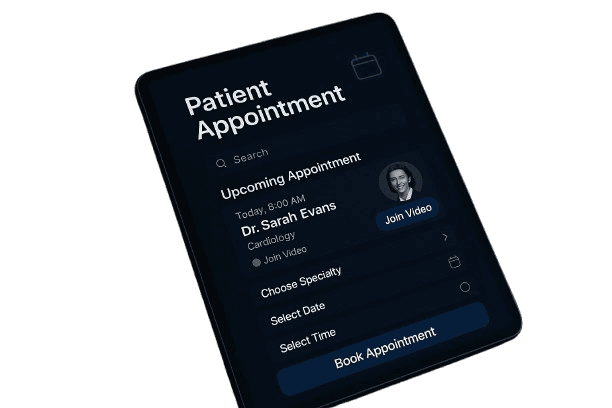
A product designed to integrate AI-driven diagnostic insights directly into clinician workflows, connecting fragmented data sources and enabling faster, more informed decision-making in regulated environments.
Scope
The end-to-end design and productization of AI-enabled clinical workflows, defining how diagnostic insights are surfaced, interpreted, and acted upon within the product experience. Partnered with product, engineering, and clinical stakeholders to align AI capabilities with real-world usage, establish scalable interaction patterns, and ensure the solution met both usability and regulatory requirements across the platform.
Timeline
8 weeks (including discovery, iteration, and alignment)
Team
• Clinicians
• Product Manager
• AI Engineers
Impact & Success Indicators
$2.1M
estimated labor savings
$250-$500K
estimated operational savings
$2.3M
estimated annual savings
• Improved speed and clarity of clinical decision-making
Increased adoption of AI-driven features
Better communication and reduced workflow complexity across teams
Key Product Decisions & Tradeoffs
Positioned AI as decision support rather than automation to ensure safety and adoption
Prioritized workflow integration over standalone features to improve usability
Balanced innovation with regulatory compliance to enable real-world deployment
Standardized product patterns to support scalability across global teams
Focused on decision velocity over feature depth to drive meaningful outcomes
Background
Healthcare organizations were investing in AI-driven diagnostics, but existing products lacked a clear strategy for integrating these capabilities into clinician workflows. Clinicians were forced to navigate fragmented systems, manually interpret complex data, and make critical decisions without cohesive support, thereby limiting both efficiency and AI adoption.
Challenge
The challenge - turning AI capabilities into a usable, scalable product experience.
Key details:
• AI capabilities existed but were not productized effectively
Clinical workflows were fragmented across multiple systems
Regulatory constraints limited rapid iteration
Lack of standardization reduced scalability across products
Approach
1. Defining the Product Strategy
I shifted the focus to answer, “How should AI improve clinical decision making?”
• Identified key decision points in workflows
Defined where AI adds the most value
Prioritized decision support over feature expansion
2. Mapping the End-to-End Product Experience
• Mapped clinical workflows across multiple touchpoints
Identified gaps between data, insight, and action
Aligned product experience to actual workflows and task
3. Aligning Across Product, Engineering, and Clinical Teams
Facilitated cross-functional alignment to balance:
Technical feasibility
Regulatory requirements
Clinical needs
4. Iteration & Validation
Tested workflows with clinicians to evaluate:
Decision clarity
Trust in AI outputs
Efficiency improvements
Solution
Defined and delivered a scalable product framework for internal app that:
Embeds AI insights directly into clinical decision points
Connects fragmented systems into a unified workflow
Standardizes interaction patterns across products
Enables clinicians to move from data → insight → action seamlessly
Key Deliverables
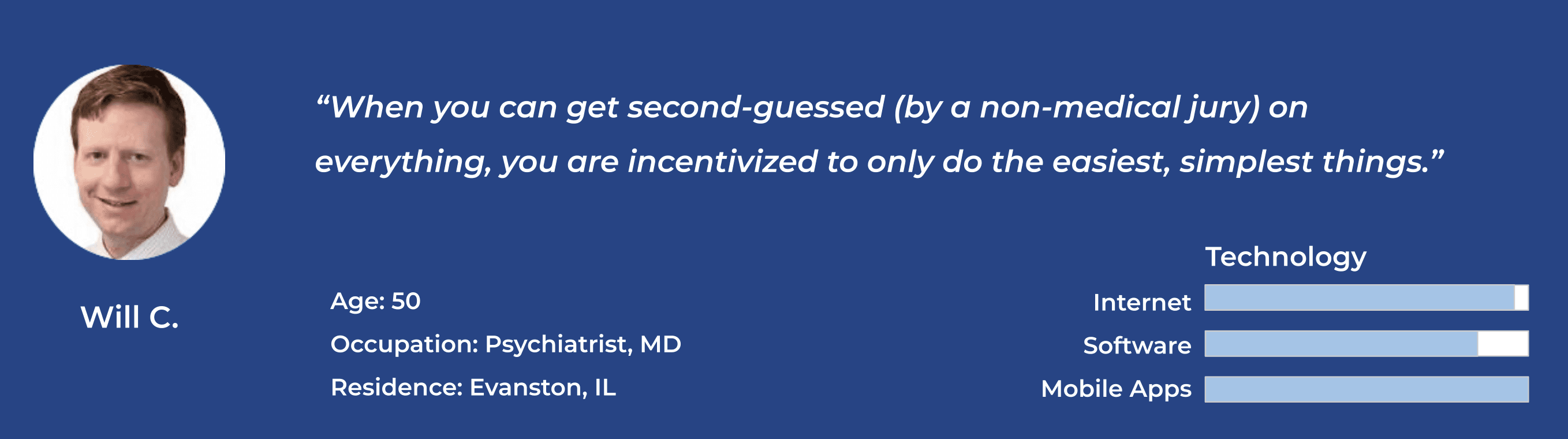
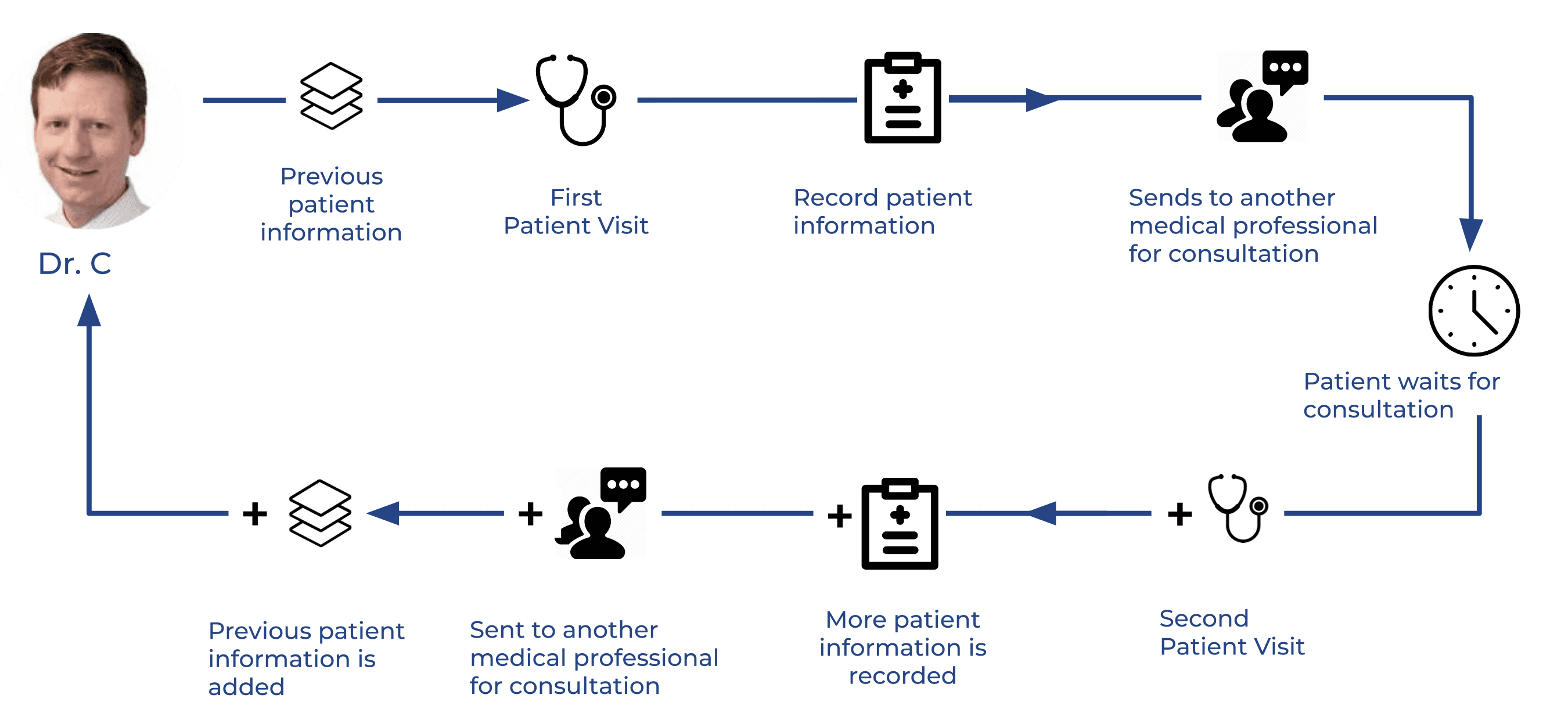
The User Journey
User interviews revealed a workflow that limited AI adoption and model with:
Disconnected product experiences
Manual interpretation of clinical data
High cognitive load
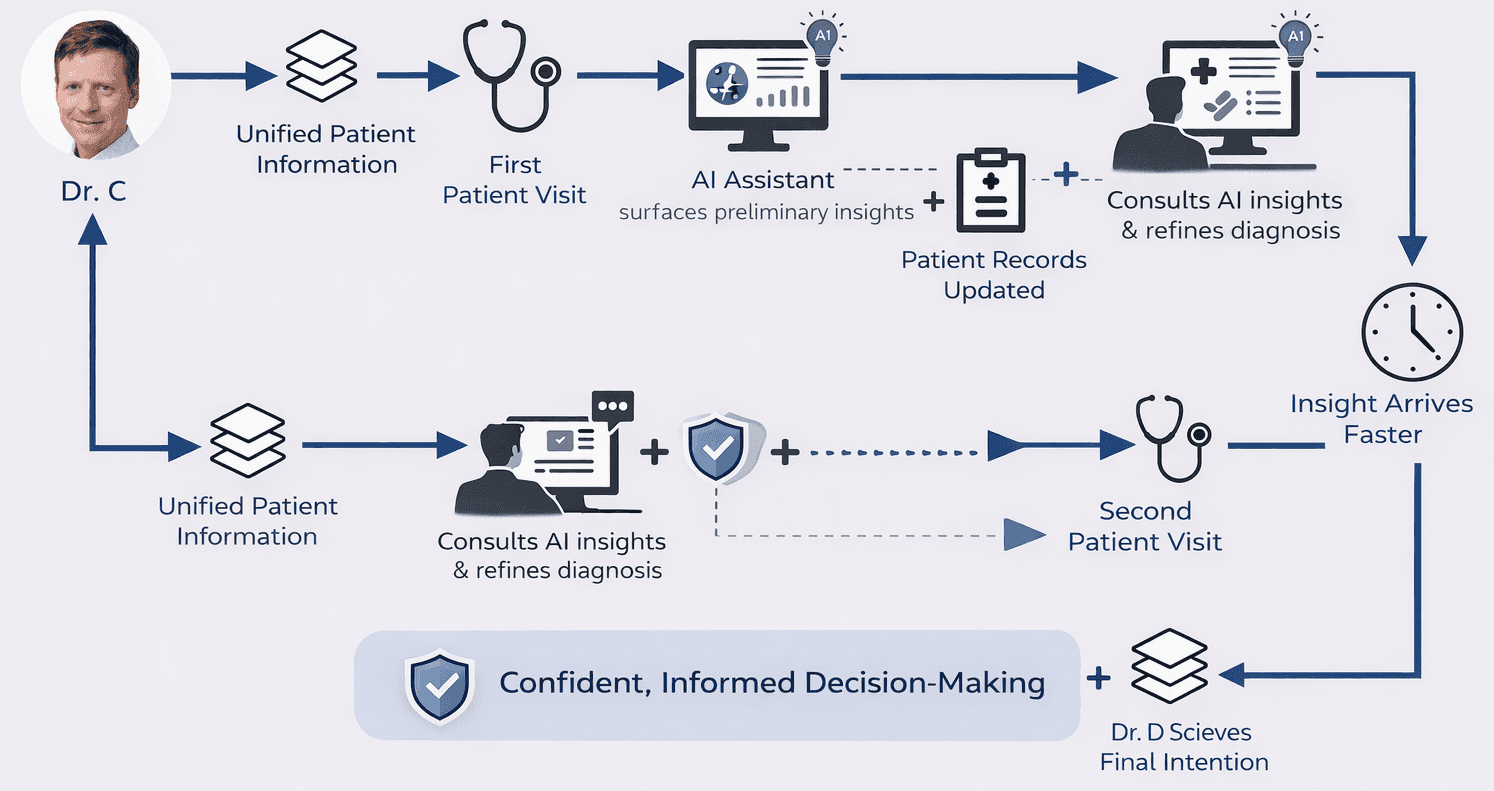
The New AI Interaction Model
The new model identifies where AI delivers the most value in the product lifecycle and introduces:
• Integrated decision support
• Improved efficiency and usability
•. Scalable product foundation across systems
Design Solution Framework

Guided Patient Routing
A central tool that gave staff a real-time view of patient flow, reducing guesswork and making handoffs smoother.
Clear Patient-facing Touchpoints
Simple, intuitive updates for patients so they knew what to expect and where to go next.
AI-Powered Predictions
Early models that flagged potential bottlenecks before they became critical, allowing staff to act proactively.

Streamlined Communication Channels
Fewer systems to juggle, with clearer connections between departments, so staff can focus on patient care.
Reflection
This work demonstrated how strong product thinking can transform emerging technologies into scalable, usable systems that deliver real-world impact in complex, regulated environments.
Project Responsibilities:
Led product direction across design, engineering, and clinical stakeholders
Influenced how AI capabilities were productized within the organization
Established frameworks adopted across multiple product teams
Copyright ©2026 Al Villanueva